
Turmeric vs Curcumin: What the Difference Means for Drinks
Turmeric is a culinary ingredient, while curcumin is one of its compounds. Learn why curcumin supplement studies cannot automatically describe a turmeric drink.
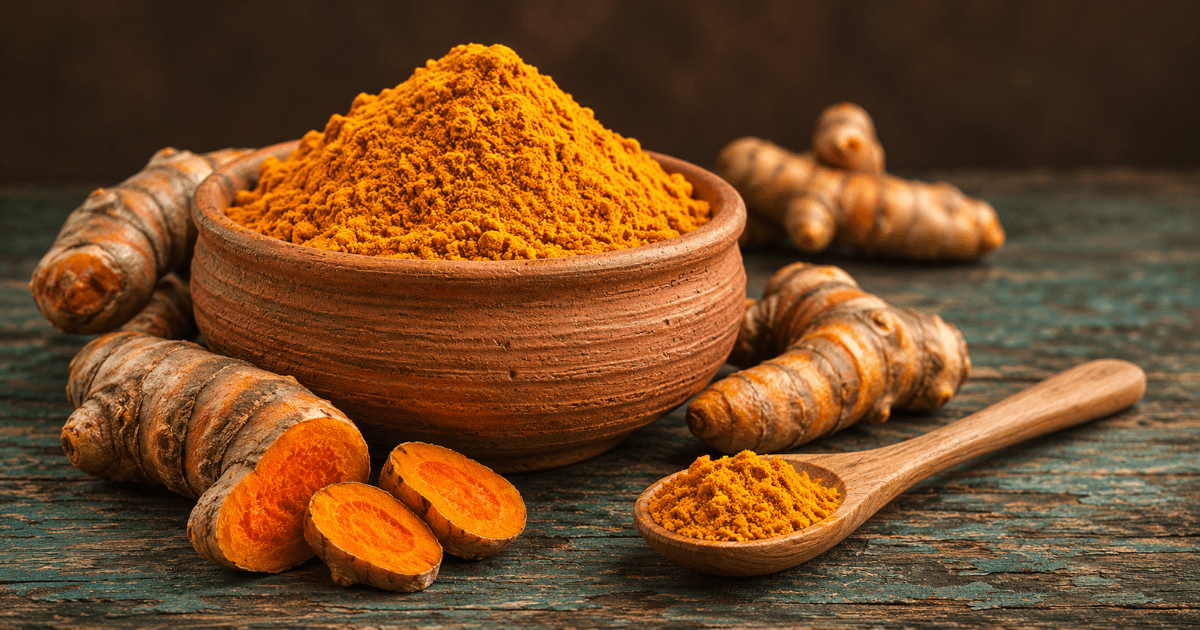
Turmeric and curcumin are connected, but they are not the same thing. Turmeric is a culinary ingredient made from the rhizome of a plant in the ginger family. Curcumin is one of the compounds naturally found in turmeric. A drink containing turmeric therefore does not automatically contain the same curcumin amount or preparation used in a supplement study.
If you are choosing a turmeric drink, the useful questions are simple: which form of turmeric is included, what information does the label give, and how does that compare with the ingredient tested in research?
What is the difference between turmeric and curcumin?
Turmeric comes from Curcuma longa. Its rhizome is used fresh or dried in foods, drinks and cooking. It contributes a distinctive yellow-orange colour and an earthy flavour to many recipes.
Curcumin is a naturally occurring constituent of turmeric, belonging to a group called curcuminoids. As the US National Center for Complementary and Integrative Health (NCCIH) explains, curcumin is associated with turmeric’s yellow colour. The word “turmeric” on a label, however, is not a measurement of curcumin.
A useful analogy is to distinguish an orange from its vitamin C: naming the food tells you what ingredient is present, but not the exact amount of one compound in the finished product. With turmeric, that distinction matters because research may test a concentrated extract rather than an ordinary food ingredient.

How do turmeric ingredients differ from supplement preparations?
Turmeric can enter a recipe in several forms, and each description conveys different information. A supplier specification or laboratory analysis may be needed to establish the amount of curcumin in any particular ingredient or finished drink.
Form | What it tells you | What it does not tell you |
|---|---|---|
Fresh or powdered turmeric | The culinary ingredient and its stated form | An exact curcumin amount |
Turmeric juice in a drink | Turmeric juice is part of the recipe, if listed | The curcumin content of the bottle |
Turmeric extract | An extracted preparation is used | Its strength without a specification |
Standardised curcumin supplement | A preparation with a declared compound or extract amount | The composition of an unrelated turmeric drink |
Some research formulations also include ingredients or delivery technologies intended to change curcumin absorption. That is another reason why two products bearing the word “turmeric” should not be treated as equivalent.
What do turmeric and curcumin studies mean for beverages?
Researchers have studied turmeric and curcumin in several settings, including work involving knee osteoarthritis and liver-related measures. Results vary with the preparation, people studied and outcomes measured. In its April 2025 review, NCCIH concludes that the evidence is not yet sufficient for definitive health-benefit conclusions overall.
Consider a trial of a curcumin capsule. To interpret its findings, you need to know the amount taken, whether the preparation was designed to improve absorption, who participated and what changed. Even a positive result does not establish that a beverage containing turmeric juice produces the same outcome. The trial and the drink are different formulations.
There is also a practical safety distinction. NCCIH reports liver injury associated with some specially formulated curcumin supplements designed for greater absorption. That observation should not be casually transferred to ordinary culinary use or presented as a finding about VINUT TRUST Ginger Shots. Anyone considering concentrated supplements alongside medication can seek individual advice from a healthcare professional.

What can a turmeric-drink label actually tell you?
Begin with information that can be checked rather than trying to calculate a clinical effect from the drink’s colour or flavour name:
- Ingredient form. Does the product identify turmeric juice, powder or extract? These terms are not interchangeable.
- Ingredient amount. If a percentage is given, does it refer to turmeric juice or another ingredient? It is not automatically a percentage of curcumin.
- Nutrition basis. Check whether the figures refer to 100 mL, one bottle or another stated serving before comparing two options.
- Complete recipe. Read the other listed ingredients, including flavour pairings and sweeteners, to understand the type of drink you are choosing.
For example, a hypothetical label stating “2% turmeric juice” would describe a recipe ingredient share, not “2% curcumin”. Even bottle volume alone cannot resolve the question: a 30 mL format and a 50 mL format tell you their sizes, not the amount of any individual turmeric compound.

How can you choose a ginger shot with turmeric?
Turmeric brings an earthy direction to ginger-based flavour combinations. Honey, citrus and warm spices can each change the overall taste of a recipe, so it helps to compare the complete ingredient pairing rather than judging by one word on the front of the bottle.
The VINUT TRUST Ginger Shot collection includes Honey Turmeric, Honey Lemon and Honey Cinnamon options in 30 mL and 50 mL formats. If Honey Turmeric interests you, start with the relevant product label and serving information, then choose the flavour and format that suit your preferences.
The distinction to remember is straightforward: turmeric is the ingredient, curcumin is one of its compounds, and a supplement study cannot tell you the exact composition or experience of a finished drink. Clear product information is a better starting point for choosing what to enjoy.
QUESTIONS & ANSWERS
Frequently asked questions
Does a yellow turmeric drink necessarily contain more curcumin?
No. Appearance is not a reliable quantitative test. A specific curcumin amount requires appropriate ingredient specifications or finished-product analysis.
Should I add black pepper to a turmeric beverage to copy a supplement study?
Do not alter a ready-to-drink recipe on that assumption. Supplement trials may use different formulations, and those results cannot be transferred automatically to an ordinary turmeric beverage.

TOP 4 BEST DRINKS FOR IFTAR: FAST RECOVERY & HYDRATION | VINUT TRUST
Read Story
Best Drinks for Iftar and Suhoor: A Practical Ramadan Hydration Guide
A reader-first guide to drinking between iftar and suhoor: start with water, compare common beverages, read labels and know when medical advice matters.
Read Story
Four Iftar Drinks Compared: What to Choose and Why
Compare water, milk or unsweetened alternatives, fruit drinks and caffeine-free infusions at iftar, with practical label-reading tips and no exaggerated recovery claims.
Read Story