
How to Store Mango Powder: Four Practical Ways to Protect Quality
Learn four practical mango powder storage habits, how moisture and packaging affect quality, and why the product label matters.

How to Store Mango Powder: Four Practical Ways to Protect Quality
The short answer: Keep mango powder in its correctly sealed package, use dry utensils, protect it from heat and humidity, and follow the storage and date instructions on the particular product label. Powders are convenient, but the word “powder” does not guarantee that every formulation has the same shelf life.
Mango powder can add tropical flavor to drinks, yogurt, desserts and baking. Whether you have a finely ground dried-fruit ingredient or an instant mango-flavored drink mix, understanding moisture, packaging and handling helps you make better choices at home.

Did you know how to preserve mango powder?
First, identify which kind of mango powder you have
Two products sold as mango powder may be quite different. One might primarily contain dried mango. Another may be an instant drink mix that includes sugar, carriers, acidity regulators or flavorings. These differences matter when you compare ingredients, mixing directions, nutrition information and storage instructions.
Start with the package, not a generic online claim. Check the product name, ingredient list, declared storage conditions, date marking and any guidance after opening. For packaged VINUT TRUST products, use the details printed on the exact SKU you purchased rather than assuming that every mango powder is a 100% fruit powder.
For a related introduction to the product format, see Mango Powder by VINUT TRUST. That article introduces applications, while this guide focuses specifically on handling and storage.
Why processing and packaging matter
Different drying and formulation methods produce powders with different moisture behavior, particle size, flavor characteristics and ingredient profiles. It is not accurate to assume that every mango powder is freeze-dried, contains no other ingredients or retains the same vitamins as fresh mango. Any specific nutrition claim must be checked against the relevant product information.
After drying and milling, the package helps protect a powder from its environment. The National Center for Home Food Preservation explains that dried foods can absorb moisture again during storage and that heat affects quality over time. Commercial drink mixes may have additional formulation and packaging considerations, so the label remains the primary instruction for the product in your hand.

Production process of mango powder — original article illustration. This image does not verify a specific VINUT TRUST manufacturing process.
Four ways to store mango powder more carefully
1. Keep the original package securely closed
If the packaging is designed to be resealed, close it firmly after every use. Otherwise, follow the label's instructions for storage once opened. A suitable clean, dry, food-grade airtight container may help protect dry products from humid air when the original package cannot be effectively resealed. If you transfer the powder, keep the original label or record its name, lot, date and storage instructions.
Do not assume that a decorative jar automatically provides the same protection as the original barrier packaging. Utah State University Extension explains that packaging materials differ in their resistance to moisture and oxygen.
2. Keep moisture out during scooping and mixing
Always use a completely dry, clean spoon or scoop. Avoid holding an open bag over a steaming kettle, hot pan or recently washed sink. Take out only the amount you need, then seal the remaining powder promptly. In a humid kitchen, leaving a package open while making multiple drinks creates an avoidable opportunity for the contents to absorb moisture.
Clumping does not, by itself, prove that a powder is unsafe or safe. Changes in texture should prompt a closer check of the package, date, odor and manufacturer's instructions. If there are signs of mold, moisture intrusion, contamination or unusual spoilage, do not use the product.

How to properly store mango powder? Original storage illustration retained.
3. Choose a cool, dry and dark storage location
A closed cupboard away from windows, ovens and direct sunlight is often more suitable than a warm, damp counter. The key principle is to avoid excessive heat, light and humidity while following any stricter product-specific requirements.
The previous version of this article called 15–20°C the ideal temperature for mango powder in general. That precise range cannot be treated as a universal commercial-product standard without SKU-specific evidence. University extension guidance supports cool, dry, dark conditions for dried foods, but does not replace a manufacturer’s validated storage conditions for a particular instant drink mix.
Do not refrigerate every powder automatically. Moving a poorly sealed container between cold and warm places can introduce condensation. Refrigeration is appropriate only when the product's instructions and packaging support it.
4. Keep the date and opening instructions visible
Check whether the package gives a best-before date, a use-by date, or instructions that change after opening. Record the opening date when helpful, particularly if you store more than one container at home. Use the oldest suitable stock first and do not treat an unverified internet estimate as a shelf-life guarantee.
An unopened, sealed bag and a frequently opened container may experience very different storage conditions. Always check the actual label for the relevant product. If the seal is damaged, the product has become wet or there are visible signs of spoilage, stop using it and contact the seller or manufacturer when clarification is needed.
How to choose mango powder before you buy
Storage begins with product selection. A useful package-checking routine includes:
- Identity: Does the label clearly distinguish dried-fruit powder from a formulated instant mango drink mix?
- Ingredients: Are added sugars, carriers, flavors and other ingredients disclosed as required in the intended market?
- Packaging: Is the container intact, properly sealed and appropriate for the product?
- Instructions: Are preparation, storage, date and quantity information clear enough for your needs?
Color alone is not a reliable quality certificate. Shade can differ because of fruit variety, processing and formulation. Likewise, a pleasant aroma is not proof of microbiological safety. Avoid assuming that a mango powder is organic, preservative-free or nutritionally equivalent to fresh fruit unless the specific product label and supporting evidence establish that claim.

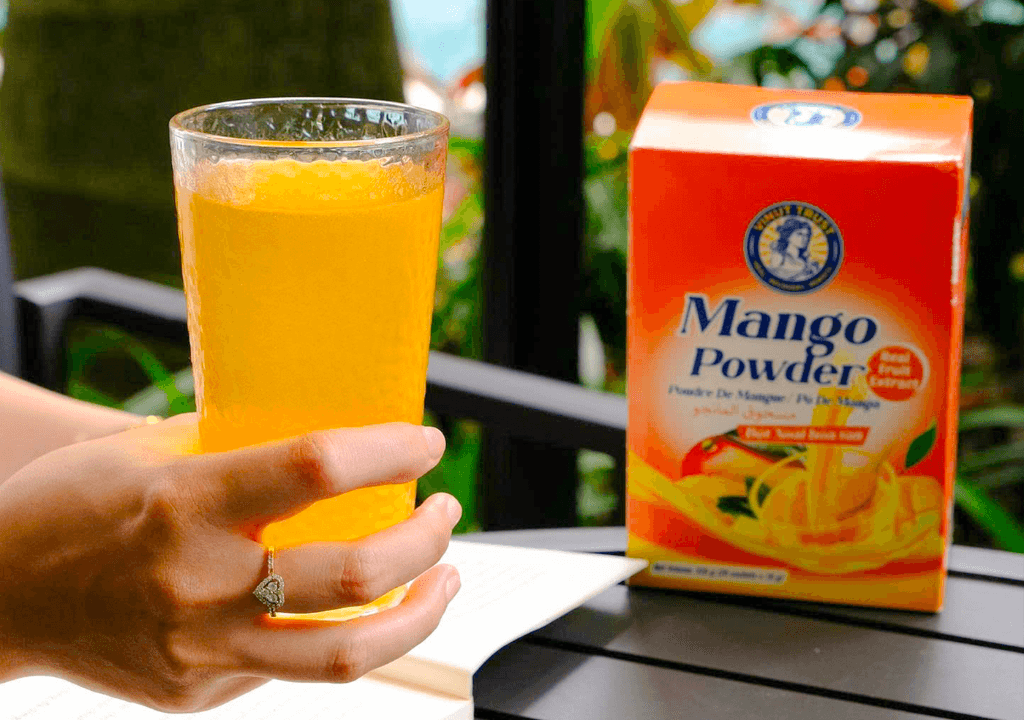
Mango powder product image from the original article. The former “organic” caption was removed because organic certification was not verified.
Using stored mango powder in everyday recipes
A suitable powder can be mixed into a drink, blended with yogurt or used in baking, but use the actual mixing instructions and serving quantity shown on its label. A powder intended for instant beverages may behave differently from a pure dried-fruit ingredient in a cake batter.
For practical format ideas, read Why Fruit Powder Is Your Best Travel Superfood, while checking its older product and nutrition claims against current labels. For a product-specific description, see the VINUT TRUST 320 g mango powder listing. Product names and attributes should be confirmed against the current pack before making a purchasing decision.
Bottom line
There is no single storage number or universal shelf-life promise for every mango powder. A better routine is simple: close the package, protect it from moisture, store it away from heat and light, and follow the specific label. If you need an answer about a particular VINUT TRUST SKU, use the package details or request product information from the brand.
Sources and further reading
- National Center for Home Food Preservation, “Packaging and Storing Dried Foods” — moisture, packaging, temperature and storage risks for dried foods.
- University of Minnesota Extension, “Preserving food at home: Drying” — cool, dry, dark storage and container choices.
- Utah State University Extension, “Packaging Foods” — packaging barriers and after-opening protection for dry foods.
- Penn State Extension, “Let's Preserve: Drying Fruits and Vegetables” — dried-food preparation and storage context.
Editorial note: The sources above support general dry-food handling principles. They do not establish the exact shelf life, composition or validated storage temperature of a VINUT TRUST mango powder SKU.
QUESTIONS & ANSWERS
Frequently asked questions
What is the best way to store mango powder after opening?
Reseal its original package promptly, keep it away from humidity, use dry utensils and follow the specific product label. If needed, use a clean, dry, food-grade airtight container and retain the original label information.
Does all mango powder need to be stored at 15–20°C?
No. A single temperature range should not be claimed for every product. Choose cool, dry conditions and follow the validated storage instructions provided on your particular package.
Can clumped mango powder still be used?
Clumping can result from moisture exposure, but its appearance alone cannot determine safety. Check the seal, label and signs of moisture or spoilage. Do not use the powder if it is moldy, contaminated or otherwise appears spoiled.
Is mango drink powder the same as pure dried mango powder?
Not necessarily. Some products contain primarily dried fruit, while instant drink mixes can contain sugar, carriers or flavorings. Read the ingredient list and preparation instructions for the product you have.
VINUT TRUST Mango Powder: Ways to Enjoy Tropical Flavour
Explore practical ways to prepare VINUT TRUST Mango Powder for drinks and desserts, with simple flavour tips and a useful guide to reading the product label.
Read Story
Pink Guava Powder: Taste, Drink Ideas and How to Choose
Curious about pink guava powder? Explore its fruity aroma, practical drink and dessert ideas, and the key differences between fruit ingredients and instant mixes.
Read Story
Coconut Water with Pulp: Five Simple Ways to Enjoy Its Texture
Discover the soft coconut pieces in pulp-style coconut water, five serving ideas and a practical guide to ingredients, sugars and safe storage.
Read Story