
Cinnamon in Drinks: Types, Flavour and Evidence Limits
Explore cinnamon types, the flavour role of the spice in beverages, and why supplement research cannot establish the effects of a finished cinnamon drink.
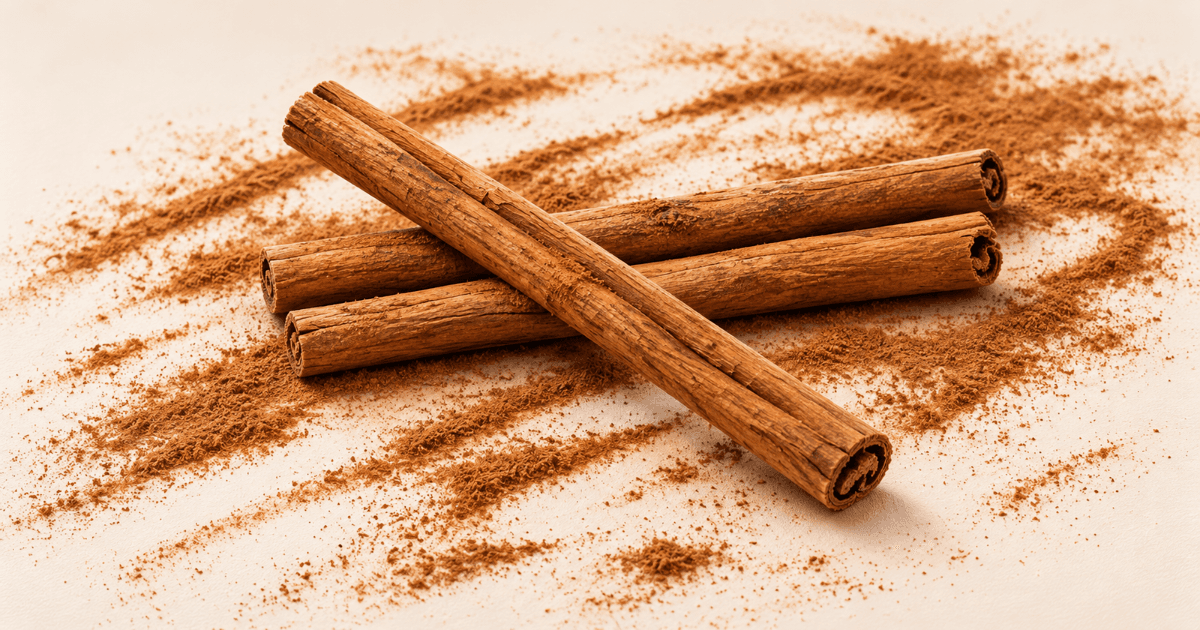
Cinnamon gives drinks a recognisable sweet-spice aroma, but the word on an ingredient list can describe more than one kind of cinnamon. Ceylon and cassia cinnamon come from different species, and the distinction matters when interpreting ingredient information or research. Neither the flavour nor the name alone tells you how much cinnamon is in a finished beverage.
For a useful comparison, check the ingredient, its flavour role and the evidence behind any claim.
What is cinnamon, and why do the different types matter?
Cinnamon is made from the bark of trees in the Cinnamomum genus. Two names often seen in food discussions are Ceylon cinnamon, associated with Cinnamomum verum, and cassia cinnamon, a name used for another group of cinnamon types. They are related spices, not interchangeable botanical identities.
The US National Center for Complementary and Integrative Health (NCCIH) explains that research can be hard to interpret when the cinnamon species or plant part is not identified. A study of one cinnamon preparation does not automatically describe another.
In a beverage, an ingredient declaration of simply “cinnamon” may not identify a species. It also may not explain whether the manufacturer used ground spice, an infusion or another cinnamon-derived ingredient. Those details require an accurate product specification, not a guess based on the front label.

What does cinnamon contribute to a drink's flavour?
Its main culinary role is aromatic. Cinnamon can give a drink familiar baking-spice notes, so a beverage may seem sweetly spiced even when the cinnamon itself is not the source of the drink's sugars. The impression will depend on the other ingredients, how the cinnamon is used and the finished recipe.
Consider a ginger-and-honey combination. Ginger brings a pungent sensation, honey contributes sweetness, and cinnamon introduces another aromatic layer. That describes the usual roles of the ingredients, not a verified tasting note for any particular bottle.
It is useful to distinguish the cinnamon ingredient from a cinnamon-flavoured product. A drink might contain a named spice ingredient, a flavouring, or both, depending on its formulation and applicable labelling rules. The full ingredient list is more informative than a flavour name on its own.
Are the proposed health benefits of cinnamon established?
Not for a cinnamon drink merely because it contains the spice. Cinnamon has been investigated in studies involving blood sugar and body weight, but findings are difficult to interpret across species, study populations and preparations. The NCCIH evidence summary says research does not clearly support using cinnamon for any health condition. In particular, it remains uncertain whether cinnamon supplements help with diabetes or weight loss.
That is a different question from whether cinnamon makes a beverage enjoyable. A research paper using capsules, an extract or a specified amount of cinnamon cannot establish the clinical effects of an unspecified amount in a ready-to-drink formula. The amount consumed, preparation and outcome measured would need to match before making such a comparison.
Health-related wording also has a regulatory dimension. The European Commission's nutrition and health claims guidance explains that claims in food labelling and advertising must meet relevant rules. An ingredient's reputation is not a substitute for evidence and approval of a claim about a marketed food.

What should readers understand about coumarin?
Coumarin is a naturally occurring substance found at differing levels in cinnamon types. The German Federal Institute for Risk Assessment (BfR) explains that cassia cinnamon generally contains more coumarin than Ceylon cinnamon. This becomes particularly relevant when large quantities of certain cinnamon products are consumed regularly.
Context matters. NCCIH describes cinnamon as likely safe in amounts commonly used in foods as a spice or flavouring. Concerns about prolonged high intake or concentrated supplements should not be presented as evidence that a particular ready-to-drink beverage is unsafe. Equally, a small bottle does not prove that the cinnamon species or coumarin content has been tested.
Without a product-specific formulation and appropriate quality information, the amount of coumarin in a bottle is unknown. If you have a health condition, use concentrated cinnamon products or have questions about medications, seek advice relevant to your situation rather than relying on a drink's flavour name.
What can you learn from a cinnamon drink label?
Use the label as a record of what the producer has actually declared. It can help you compare products, but some questions need details beyond the consumer-facing package.
Question | What you can check | What you cannot assume |
|---|---|---|
Which cinnamon is used? | Look for a stated cinnamon type or botanical name, if provided. | That “cinnamon” automatically means Ceylon rather than cassia. |
How much cinnamon is present? | Check for a declared quantity and any approved specification. | That a strong aroma reveals a particular percentage or dose. |
Is the drink sweet? | Read the ingredients and nutrition panel using the same serving basis. | That cinnamon aroma means the beverage contains no sugars. |
Does it have a health effect? | Identify the exact claim and the evidence for the finished formulation. | That findings from cinnamon supplements automatically apply. |
If a label does not specify the cinnamon type or amount, it is more accurate to say that the detail is not available from that label than to fill the gap with a confident-sounding description.

How can you explore cinnamon in a Ginger Shot?
The VINUT TRUST Ginger Shot collection includes a Honey Cinnamon option in 30 mL and 50 mL formats. It is a useful example of how cinnamon can be part of a named ginger-and-honey flavour combination.
Start with the format and ingredient information shown for the bottle you are considering. For a complete comparison, check the specific pack's ingredient list, nutrition information and serving or storage instructions. The two volumes describe bottle size, not a recommended medicinal amount or evidence of a different health effect.
For everyday beverage selection, cinnamon is best understood first as a flavour ingredient. Knowing the type, checking the actual label and keeping the research in context gives you a more reliable basis for choosing a drink than any broad promise attached to the word “cinnamon”.
Red Ginseng Drinks: Flavour, Ingredients and What Research Says
What is a red ginseng drink, and does it deliver the benefits often advertised? Learn how red ginseng is processed, what research can tell us and how to check a finished beverage.
Read Story
Lemon in Ginger Drinks: Flavour, Vitamin C and Label Facts
Lemon adds citrus character to ginger drinks, but cannot prove vitamin C content. Learn what a finished-drink label can and cannot tell you.
Read Story