Nigeria Beverage Labeling: English Text, Ingredients and Claims
Buyer checklist for English-language labels, ingredients, nutrition panels and claims on packaged drinks imported into Nigeria under the 2022 food-labelling rules.
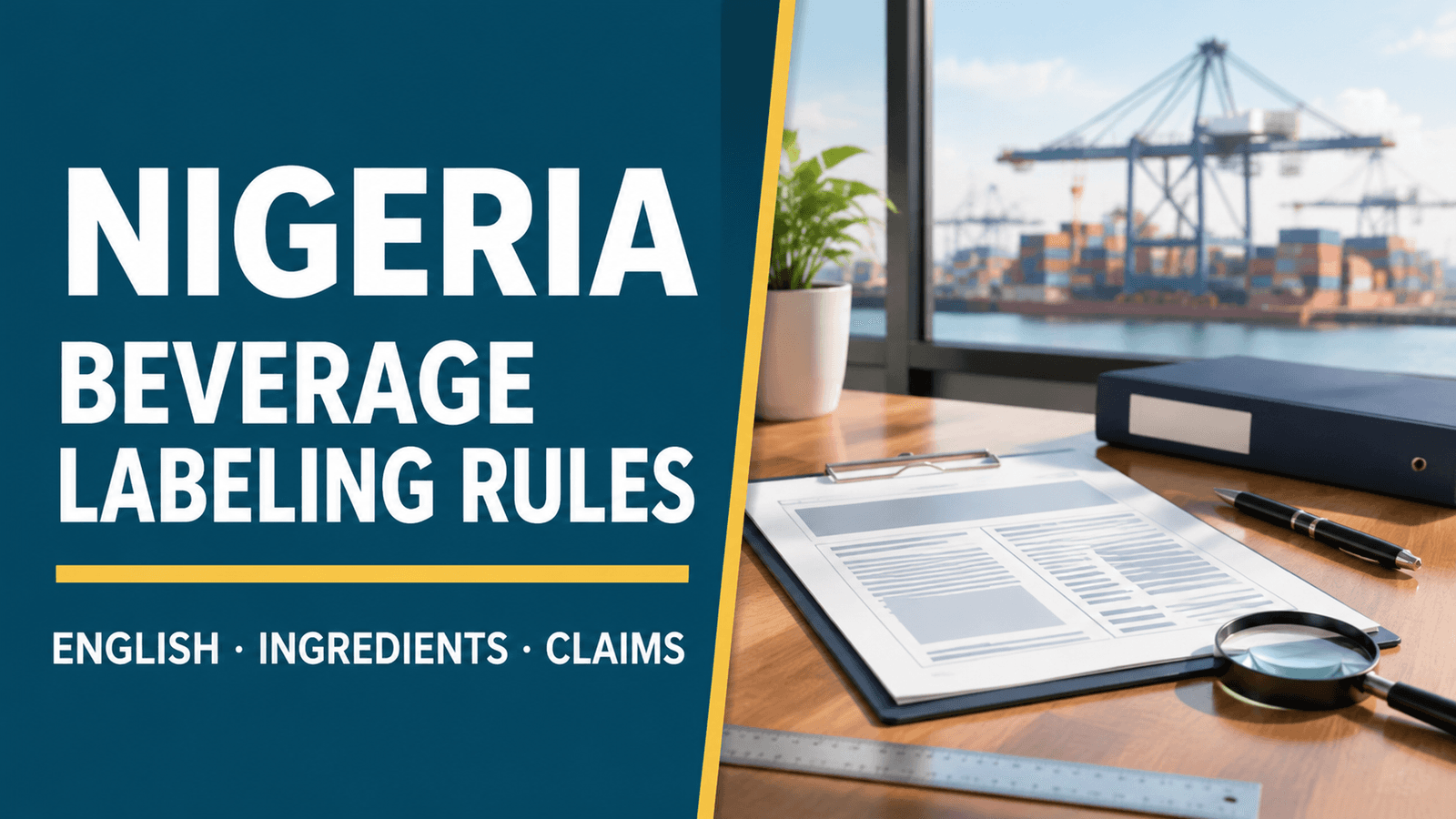
Commercially imported, prepackaged non-alcoholic drinks sold in Nigeria need label review against NAFDAC's Pre-Packaged Food (Labelling) Regulations, 2022. English declarations, an accurate product name, ingredients, importer details, dates and nutrition information are key checks. The Nigerian importer should confirm final artwork with NAFDAC before printing or shipping. Vietnam is an illustrative origin, not a verified source for any SKU.
1. Which Nigerian rules apply to packaged drinks?
The Federal Republic of Nigeria Official Gazette, S.I. No. 27 of 2023 publishes the Pre-Packaged Food (Labelling) Regulations, 2022, with stated commencement on 18 November 2022. Regulation 1 covers prepackaged food manufactured, imported, exported, sold, distributed or used in Nigeria. Regulation 25 revokes the 2005 food-labelling rules. NAFDAC confirmed the replacement on 7 August 2023.
This guide addresses Nigeria's local commercial retail market, not transit, re-export, temporary samples or customs release. Juice, coconut water, aloe drinks, ready-to-drink coffee and energy drinks are possible categories, not confirmed VINUT TRUST SKUs. General food-labelling rules may be supplemented by product-specific requirements.
The NAFDAC Guide to Food Labelling (2014) cites revoked 2005 provisions. In particular, do not let its older description of nutrition labelling override the 2022 Gazette.
2. What information belongs on the retail pack?
The Gazette covers product identity (regulations 2–4), ingredients and allergens (5–6), net content (7), manufacturer/importer details and origin (8), legibility (9), dates (10), storage (11), batch number (12), registration number (13) and nutrition (18).
The buyer should reconcile the true product name with the formula and any descriptions such as “juice”, “drink”, “concentrate” or flavour claims. Ingredients generally appear in descending order of input weight, with applicable additive and allergen declarations. Liquids declare net volume in metric units. For imports, regulation 8(2) specifies manufacturer and importer names and addresses.
Manufacturing and durability dates, storage conditions, batch details and NAFDAC product registration information also need checking. Do not print a sample registration number as if product approval existed. The local applicant should verify the final label and registration particulars.
3. English, nutrition and claims: what changes the design?
Regulation 14 requires declarations in English and permits additional languages. An English-only label is not inherently invalid for lack of another language. However, all required details must still be accurate, legible and complete.
Regulation 18(1) of the 2022 Gazette makes nutrient declaration the general rule. Regulation 18(2) allows agency-determined exceptions for certain product types. Regulation 18(4) addresses energy, fats including saturated and trans fat, carbohydrates including sugar, protein, salt and claimed nutrients. The manufacturer must supply supportable values and the importer must confirm the applicable display. Do not presume a single-ingredient juice is automatically exempt.
Regulations 4, 18(3), 19 and 22 address misleading messages, nutrition substantiation, highlighted ingredients and advertising. Claims such as “no added sugar”, “100% juice” or “high vitamin C” require real product evidence and category review. Food labels must not claim to prevent, treat or cure disease. Nutrition statements, product registration and advertising permissions remain separate decisions.
4. What should the importer check before approving artwork?
Review point | Supplier evidence | Buyer decision |
|---|---|---|
Product identity | Final formula and specification | Is the name and category correct? |
Ingredients and allergens | Composition and additive details | Does the artwork match the finished drink? |
Nutrition and claims | Product-specific values and support | Are numbers and claims substantiated? |
Traceability | Manufacturer, origin and date plan | Are names, batch and dates consistent? |
Registration and print file | Genuine NAFDAC product status | Has the local applicant reviewed this version? |
The manufacturer/exporter supplies accurate technical data. The Nigerian importer or authorised applicant resolves regulatory questions. A customs broker does not substitute for food-label approval. This table is a buyer pre-print control, not an official certificate.
5. When should a buyer stop printing or shipping?
Pause when the formula is not final, importer details are missing, nutrition is unsupported, a claim implies medical treatment or artwork differs from registration records. Never infer HS classification, duties, sample exemptions or shipment clearance from this guide. NAFDAC's draft-regulations page contains consultations, not automatically enacted law.
Before an order is placed, the importer should confirm post-2022 amendments, category rules, current registration workflow and how artwork changes must be handled. To discuss OEM/Private Label sourcing with VINUT TRUST, share the destination, actual beverage formula, pack format and expected order volume. Local professionals remain responsible for compliance decisions.
QUESTIONS & ANSWERS
Frequently asked questions
Is English required on imported drink labels in Nigeria?
Regulation 14 of the 2022 regulations requires prescribed declarations in English and permits additional languages. The importer must still check the entire artwork.
Can a 100% single-ingredient juice omit a nutrition panel?
Do not assume so. Regulation 18 has a general nutrient-declaration rule and allows agency-determined exceptions. Seek SKU-specific confirmation from NAFDAC.
May a supplier print a NAFDAC registration number from sample artwork?
No. Regulation 13 concerns the number issued to the registered product. Verify the genuine applicant record before printing any registration number.
Does changing an OEM/private-label buyer require a new filing?
Potentially. The authorised Nigerian applicant should confirm whether a variation or new product application is needed before new artwork is printed.
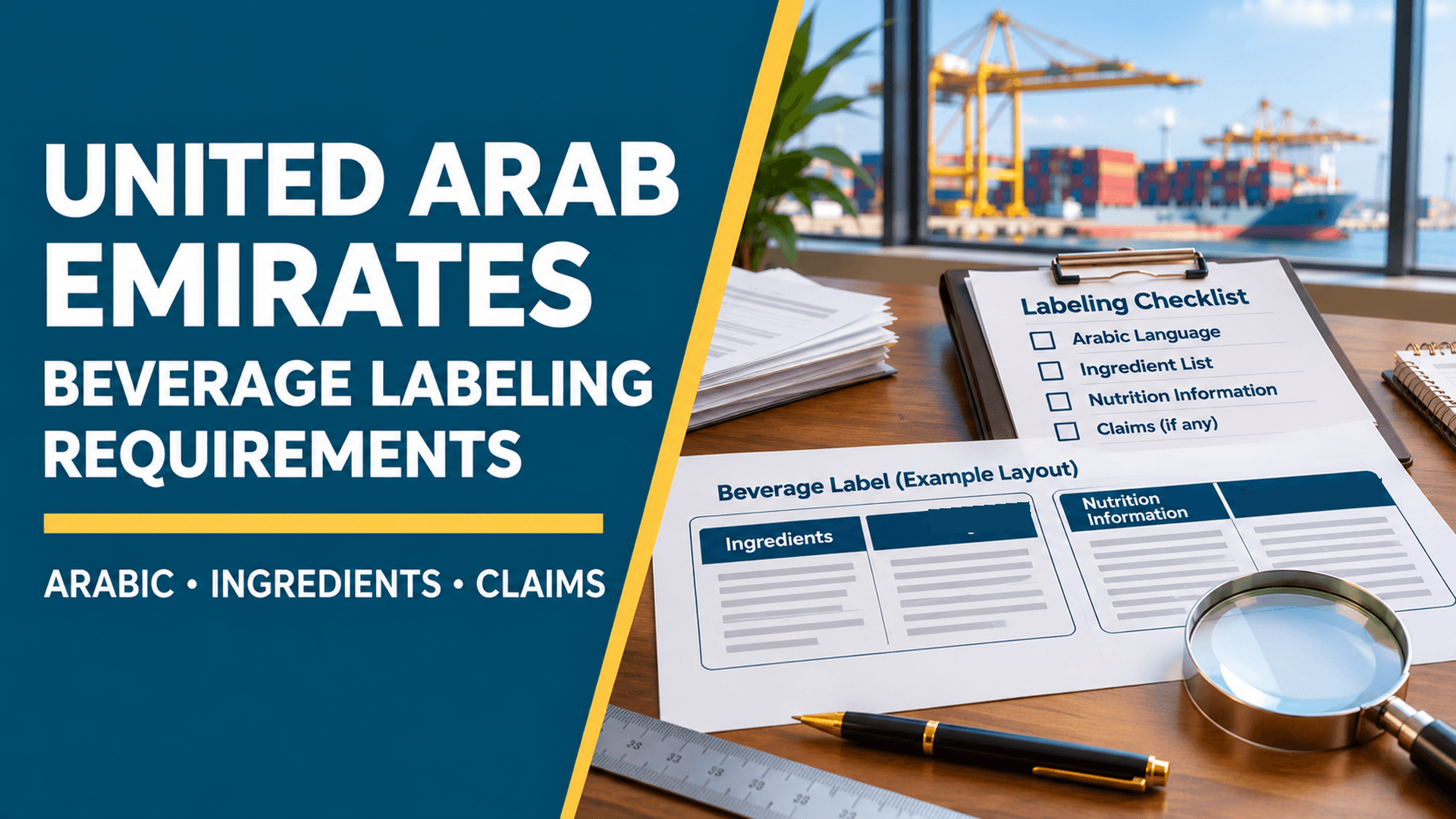
UAE Beverage Labeling: Arabic, Ingredients and Nutrition Claims
An importer-focused UAE beverage label checklist covering Arabic wording, ingredients, nutrition panels, claims and the separate Dubai food-item review process.
Read Story
Ghana Beverage Labeling: Language, Nutrition and Claims
An importer-led Ghana beverage label checklist covering English text, product identity, dates, nutrition evidence, claims and artwork review before print.
Read Story
Saudi Arabia Beverage Labeling: Arabic and Nutrition Checklist
A Saudi importer’s practical label-artwork checklist for packaged non-alcoholic drinks, covering Arabic text, nutrition information, claims and the checks needed before printing.
Read Story