
VINUT TRUST Nata de Coco: A Practical Guide for Product Buyers
Exploring VINUT TRUST nata de coco for beverages or desserts? Compare the listed pack formats, understand the jelly texture and use a practical checklist to request verified product details.
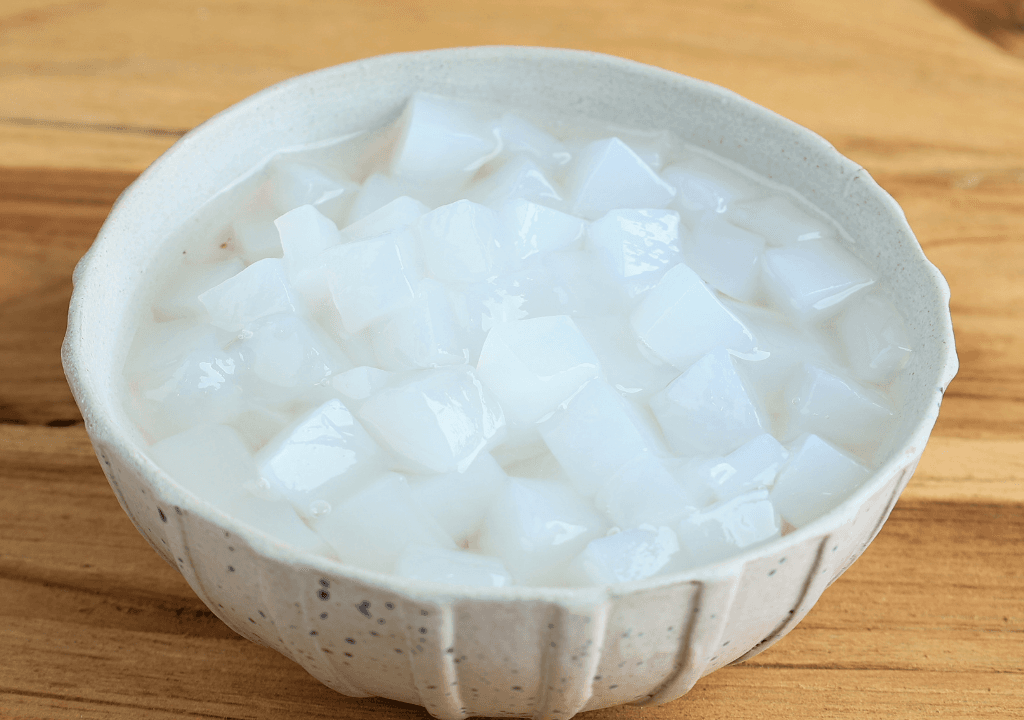
Nata de coco brings a soft, springy bite to drinks and desserts. For a business evaluating it as an ingredient or a packaged food, the useful starting point is not a promise of “premium quality” but a more practical set of questions: Which product is offered? How will it be used? What evidence supports its ingredients, texture, packing and storage?
VINUT TRUST has a Nata de Coco collection that currently lists products labelled 3.2 kg and 10 kg. Those listings are a starting point for an enquiry, not a substitute for a current technical specification, a verified inventory position or an approved export quotation. Here is how to evaluate the format without assuming that every requirement has already been confirmed.
What is nata de coco, and why does texture matter?
Nata de coco is an edible gel made of bacterial cellulose formed during fermentation of a suitable coconut-water-based medium. A 2024 paper in Current Research in Food Science discusses how microbial fermentation conditions affect cellulose production. It does not establish the manufacturing method or batch controls for any particular VINUT TRUST product.
The jelly's distinctive chew is its main attraction in a beverage or dessert. A ready-to-drink fruit beverage, for example, may be smooth without inclusions but offer an additional textural experience when coconut jelly pieces are added. In a chilled dessert, the same ingredient can contrast with soft fruit and creamy bases.

This explains why the ingredient is interesting, not how a particular commercial batch performs. Texture, sweetness and appearance are characteristics to evaluate using an actual sample and the specific product documentation.
Which VINUT TRUST product formats are listed?
The brand's public category page shows Premium Nata de Coco 3.2KG and Premium Nata de Coco 10KG. The names identify listed nominal pack sizes, but they do not confirm a particular order quantity, packing material, net drained weight, destination availability or current lead time.
For a first enquiry, record the exact product title and the intended use. A café might want a topping that works well with a chilled drink. A dessert producer may care more about the texture after mixing with other ingredients. A distributor will also need the current packing, storage and market-documentation details.
It is worth asking whether the quoted weight refers to the complete contents, including liquid, or to another measure. Do not treat the pack name as a verified specification for drained weight or the ratio of jelly to packing liquid.
What should a product buyer verify before ordering?
Instead of accepting an unsupported list of certifications or a blanket shelf-life promise, use a product-by-product evidence checklist.
Decision area | What to ask for | What to check against the sample or document |
|---|---|---|
Product identity | Current product name, SKU and package photos | The item matches the actual quotation |
Ingredients | Full ingredient and allergen statements | All components, including any packing liquid, are disclosed |
Texture | Piece size, appearance and any approved texture criteria | The sample works in the intended drink or dessert |
Packing | Net quantity, drained weight if applicable and case details | The specification matches the logistics and serving plan |
Storage | Unopened and after-opening instructions, shelf-life evidence | The instructions suit intended handling |
Market documents | Relevant certificates or declarations, with scope and validity | The document actually applies to the product and destination |
Commercial terms | Availability, MOQ, lead time and quotation | All figures are confirmed in writing for the current enquiry |
The checklist is an evaluation tool. It does not imply that VINUT TRUST has already supplied any of these documents or that a particular certification is mandatory in every destination.

A buyer can make better comparisons by keeping the same information for each product under consideration. This is more reliable than comparing claims such as “best quality”, “clean label” or “export ready” when their meaning has not been defined.
How should buyers assess claims about origin and production?
Nata de coco as a food category is associated with coconut-water fermentation. That general fact does not demonstrate the exact country where the coconuts in a particular package were grown, the names of supplying farms or whether a brand owns a manufacturing plant.
Similarly, research on Komagataeibacter and other cellulose-producing bacteria explains the ingredient's scientific basis, not proof that a named brand uses a specified culture, automated production line or validated process. An International Journal of Food Microbiology study from 2024 investigated how variation in coconut-water fermentation conditions influences cellulose production. Its scope is the research setting, not VINUT TRUST's facility.
For sourcing and production claims, request documents tied to the product or relevant producer, then check dates, scope and the exact legal entity. A certification shown on a corporate page should not automatically be presented as certification of every product. The same principle applies to “deforestation-free”, “no additives” and other statements that require a defined standard or supporting evidence.
How to evaluate a sample in its intended application
A sample test should answer one question: Does the product work for the intended consumer experience and operating process? Set up a simple, repeatable comparison rather than a tasting based only on a photograph.
For a beverage: Prepare the drink using the actual recipe. Check how the pieces look and feel when served. Note whether the chosen piece size fits the serving method and whether the finished drink remains enjoyable under its intended conditions.
For a dessert: Test how the jelly sits alongside fruit, cream or other components. Observe taste balance, texture and how easy it is to portion. Follow the manufacturer's instructions for handling the sample.
For distribution: Compare labelling, package durability and storage instructions against the distribution plan. Obtain product-specific evidence before quoting shelf life or regulatory suitability to customers.
Do not infer a measured stability result from one informal sample test. When a particular performance claim matters commercially, request validated specifications or an appropriate test method.
What information should go into a VINUT TRUST enquiry?
A clear first message helps the brand understand the request without requiring unverified claims about OEM services or factory capacity. Include the product listing and pack size, intended application, destination market, estimated need if known, and the documents or samples you want to review.
VINUT TRUST's contact page asks visitors to include the product name, pack size and country or market when relevant. Use that channel to confirm current information rather than relying on a phone number or promotional promise copied from an older article.
The two listed nata de coco formats provide a practical place to start a conversation. The next step is to match a real sample, current specification and commercial offer to the buyer's intended use. That is the basis of a sound product decision—not an unsupported assurance about global certifications, ingredient sourcing or minimum order quantities.
QUESTIONS & ANSWERS
Frequently asked questions
What VINUT TRUST nata de coco sizes are shown on its website?
The currently indexed Nata de Coco collection lists products titled Premium Nata de Coco 3.2KG and Premium Nata de Coco 10KG. Confirm current availability and complete packing details directly before ordering.
Can I assume VINUT TRUST nata de coco has HACCP, FSSC 22000 or other specific product certifications?
No. Ask for the current certificate or declaration and verify its legal entity, scope, validity and relevance to the actual product and destination market.
What should I test before using nata de coco in a drink?
Assess the actual sample in the intended recipe, including piece size, chew, appearance, portioning and preparation conditions. Obtain product specifications for commercial performance claims.
How can an international buyer enquire about VINUT TRUST nata de coco?
Use the official VINUT TRUST contact page. Include the product and pack size, intended application, destination market and the specification, sampling or commercial details you need.
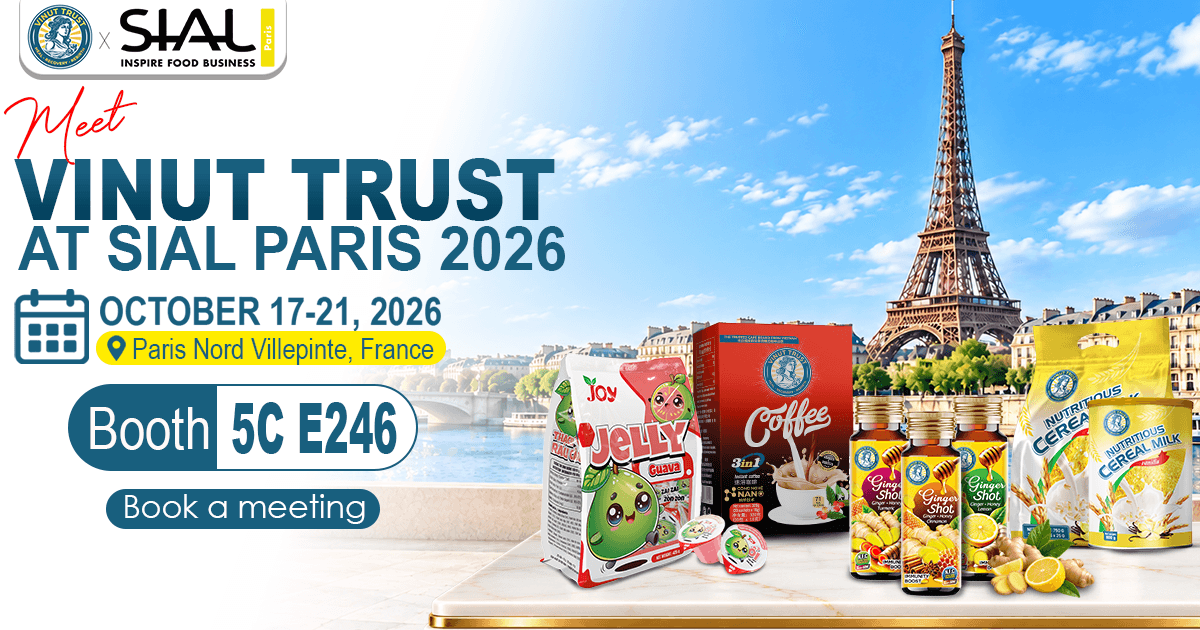
VINUT TRUST at SIAL Paris 2026: An Archive of Its October Preview
Revisit VINUT TRUST's original SIAL Paris 2026 announcement, the verified exhibition dates, booth reference, product categories and key questions to check after the event.
Read Story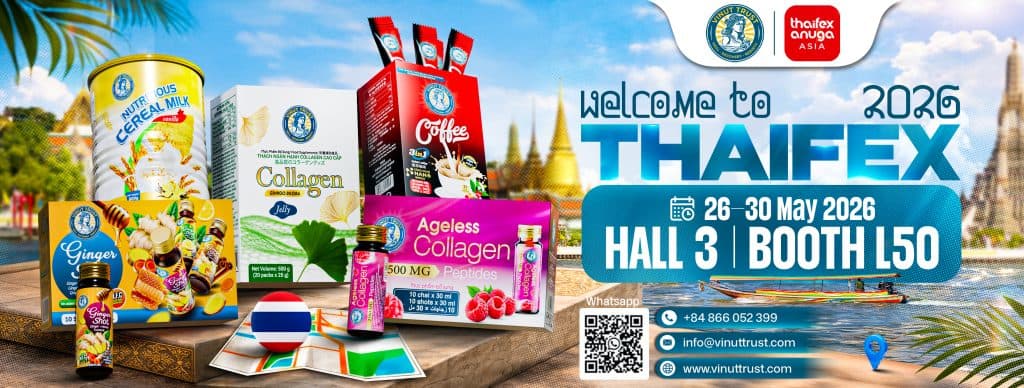
VINUT TRUST's THAIFEX 2026 Announcement: Event Facts and Brand Archive
A factual look back at VINUT TRUST's May 2026 THAIFEX announcement, the organiser's confirmed event figures and the brand's current beverage collections.
Read Story
From the Tropics to Dubai: VINUT TRUST's Gulfood 2026 Archive
Revisit VINUT TRUST's original January 2026 Gulfood announcement with confirmed event dates, the brand-announced Dubai booth and links to current beverage collections.
Read Story