
HOW TO EVALUATE COCONUT WATER CONTRACT MANUFACTURERS: A COMPLETE GUIDE FOR GLOBAL BEVERAGE BRANDS


As the global beverage industry shifts toward clean-label, natural, and functional hydration, coconut water has become one of the most dynamic and fast-growing categories. Whether used as a standalone drink, blended with fruit purées, fortified with electrolytes, or developed into functional wellness beverages, coconut water now plays an essential role in both retail and foodservice markets worldwide.
Behind every successful coconut water brand is a reliable, technically capable, and globally compliant coconut water contract manufacturer. Choosing this partner is one of the most impactful decisions a beverage brand will ever make.
A strong OEM factory ensures consistency, safety, flavor integrity, and scalability. A weak partner puts your brand at risk — leading to unstable batches, regulatory issues, quality deviations, product recalls, and significant financial losses.
This guide is designed to help international beverage companies — from first-time founders to established industry leaders — confidently evaluate and select the right coconut water contract manufacturer for long-term growth.
Mục lục
1. What Is Coconut Water Contract Manufacturing?
Coconut water contract manufacturing (also known as OEM, co-packing, or beverage outsourcing) is the process of partnering with a specialized factory to produce coconut water under your brand.
These manufacturers provide the full spectrum of production services, ensuring the beverage meets regulatory, sensory, and commercial requirements for global markets.
Key Functions of a Coconut Water OEM Factory
A professional coconut water OEM factory typically handles:
- Sourcing fresh young coconuts or coconut water concentrate
- Extracting, filtering, and stabilizing raw coconut water
- Adjusting sweetness, flavor, or adding functional ingredients
- Conducting microbiological and chemical testing
- UHT, hot-fill, or aseptic processing for shelf stability
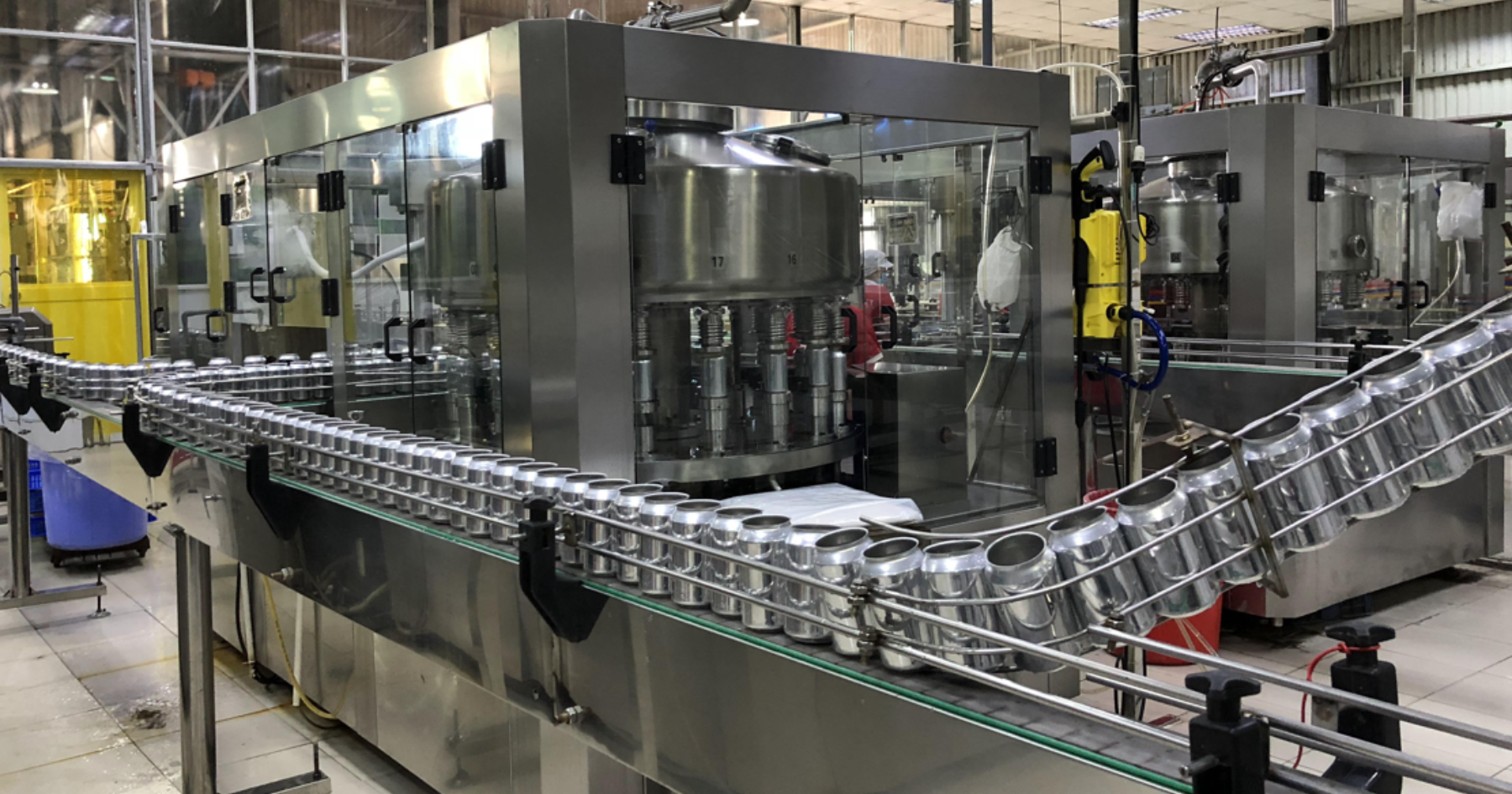
- Filling into cans, PET bottles, glass, Tetra Pak, or bag-in-box
- Coding, packaging, palletizing, and export documentation
- Shipment preparation for global distribution
A high-tier coconut water contract manufacturer does more than simply “fill your product.” They maintain strict control over sourcing, processing, quality assurance, and regulatory compliance — ensuring your product performs consistently across every shipment.
2. Evaluation Criteria for Coconut Water Contract Manufacturers
A strong partner should excel not only in cost — but in technology, traceability, compliance, documentation, and communication. Below is a comprehensive, premium evaluation framework.
2.1. Manufacturing Capability & Technology
Processing Technology
Look for factories equipped with:
- UHT sterilization
- Aseptic filling for long shelf life
- Hot-fill systems
- Inline filtration & homogenization
- Oxygen-reduction systems (critical for coconut water flavor retention)
These technologies help preserve the product’s natural taste, aroma, and electrolyte balance.
Filling & Packaging Formats
Verify that the manufacturer supports the formats required by your brand:
- Aluminum cans
- PET bottles (standard or lightweight eco PET)
- Glass bottle
- Tetra Pak cartons
- Bag-in-box
- Foodservice bulk packs
Production Scalability
A capable beverage OEM must handle:
- Pilot or R&D batches
- Small MOQs for new brands
- Large commercial runs for global retailers
- Multi-SKU programs
Choose a partner that can grow with your demand — not limit it.
2.2. Raw Coconut Sourcing & Ingredient Quality
Coconut water quality begins with the coconut itself. Premium manufacturers:
- Source from established coconut regions (e.g., Bến Tre, Việt Nam)
- Ensure consistent maturity and sweetness
- Perform raw-material inspections upon arrival
- Maintain farm-to-factory traceability
- Avoid dilution unless requested
- Document Brix levels and pH consistency
Ask for:
- Ingredient specifications
- Raw coconut profiles
- Seasonal variation strategies
2.3. Certifications & Global Compliance
International beverage brands require manufacturers to meet strict regulatory standards.
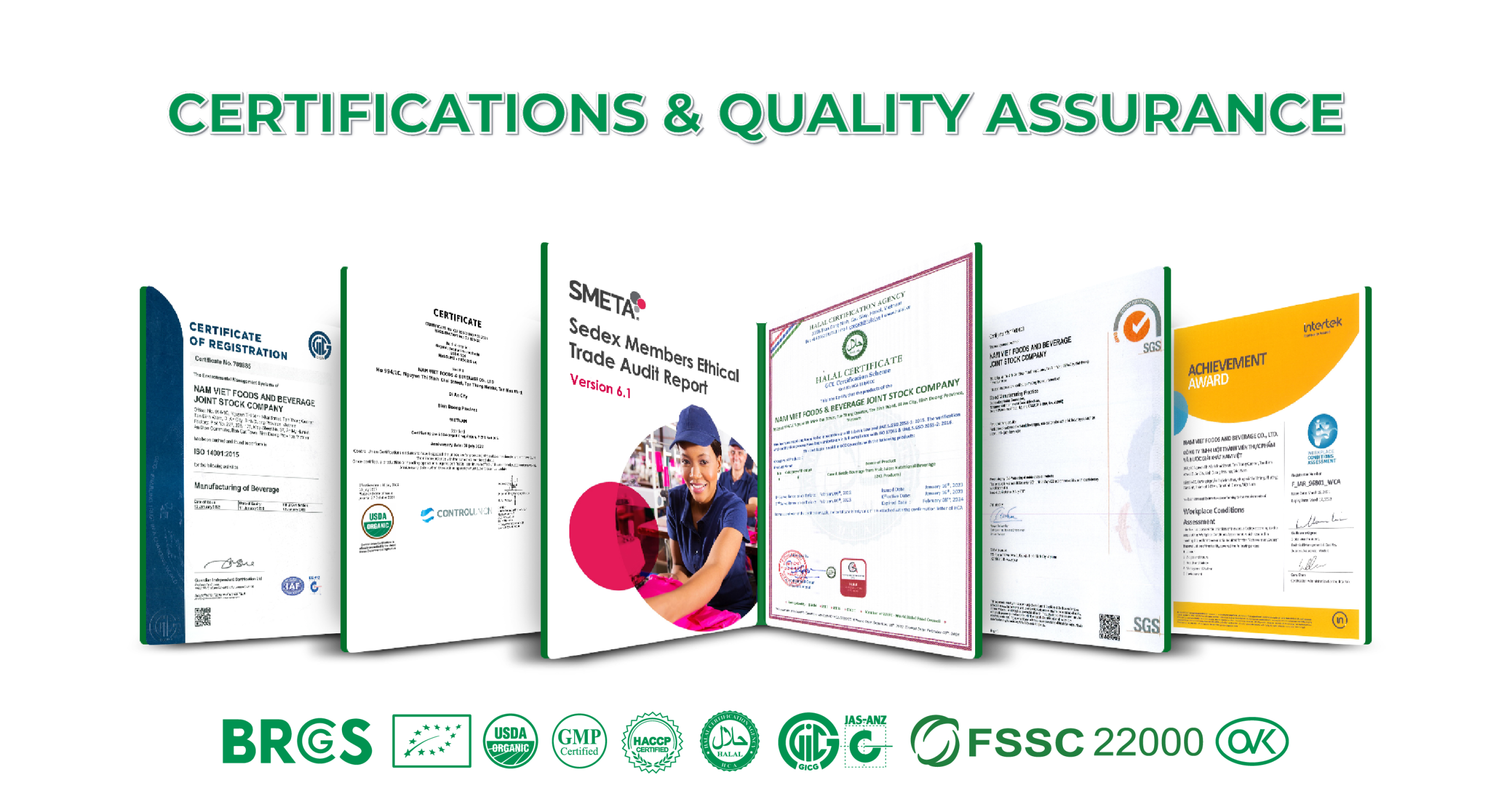
Common certifications include:
- ISO 220000
- HACCP
- GMP
- BRC
- FSSC 22000
- HALAL
- Organic USDA/EU
- FDA (for U.S. market)
- Export licenses with full CO, phytosanitary & analysis reports
A high-level coconut water OEM factory must also be familiar with regulatory requirements in the U.S., EU, Middle East, Australia, and Asia-Pacific.
2.4. QA/QC System & Laboratory Testing
World-class QA/QC is the foundation of safe, consistent beverages.
A strong factory will have:
- In-house microbiological testing
- Chemical analysis (pH, Brix, conductivity)
- Heavy-metal screening
- Sensory evaluation panels
- Stability testing protocols
- Metal detection or X-ray
- Batch-tracking and traceability
Look for 8–12 QC checkpoints throughout production — from coconut reception to final pallet loading.
2.5. Minimum Order Quantity (MOQ)
Typical MOQs in the industry:
- Startups: 1–2 containers
- Mid-size brands: 5–10 containers
- Global chains: 20+ containers/month
Choose a manufacturer with MOQs aligned to your stage of growth — flexible for beginners, scalable for expansion.
2.6. Pricing Transparency
Accurate pricing includes:
- Coconut raw material cost
- Processing (UHT/hot-fill/aseptic)
- Packaging materials
- Certifications
- Labor & energy
- Export logistics
- Seasonal fluctuations
Premium factories provide transparent quotations without hidden charges — and offer options for long-term cost stability.
2.7. Lead Time & Logistic Efficiency
Standard timelines:
- R&D formulation: 5–15 days
- Sample shipment: 7–10 days
- Production lead time: 25–40 days
- Export documents: 3–5 days
Smooth operations and clear communication reflect a reliable partner.
3. Comparison Framework for Coconut Water OEM Factories (Narrative)
Manufacturer A – High-Capability Specialist
- Advanced UHT & aseptic technology
- Strong global certifications
- Rigid QC systems
- Stable coconut sourcing
- Ideal for premium brands seeking long-term stability
Manufacturer B – Mid-Tier Generalist
- Acceptable QC and certifications
- Flexible MOQs
- Broader beverage portfolio
- Suitable for regional markets or budget lines
Manufacturer C – Low-Cost Producer
- Minimal certifications
- Lower QC consistency
- High risk of instability and hidden costs
- Only suitable for low-budget, non-premium markets
4. Tips for First-Time Founders vs. Experienced Beverage Brands
4.1. For New Founders/ New Brands
- Clarify product attributes (taste, sweetness, shelf-life)
- Request multiple samples for comparison
- Choose flexible MOQs
- Avoid ultra-cheap suppliers
- Communicate continuously
4.2. For Established Brands
- Prioritize scalability
- Require complete documentation
- Ensure multi-SKU capability
- Seek advanced processing like aseptic/UHT
- Lock long-term costs where possible
- Ensure compliance across U.S./EU/GCC markets
5. When to Move Forward — and When to Walk Away
Signals You Should Proceed With a Manufacturer
Choose them if they demonstrate:
- Clear sourcing traceability
- Strong certifications
- Transparent pricing
- Consistent sample quality
- Professional communication
- Scalable production
Signals You Should Reject a Manufacturer Immediately
Walk away if you experience:
- Vague answers
- No documentation
- Low, unstable pricing
- Product inconsistencies
- Hidden charges
- No traceability
- Delayed communication
6. Conclusion & Next Steps: Choosing the Right Coconut Water OEM Partner
Choosing the right coconut water contract manufacturer directly influences your product’s quality, market success, and long-term brand growth. With a clear evaluation framework — covering technology, sourcing, QA, certifications, logistics, and cost structure — you can confidently identify a partner who aligns with your goals.
Your Next Steps
- Finalize flavor, packaging, and market positioning.
- Shortlist 3–5 qualified OEM factories.
- Request samples and technical documentation.
- Conduct a virtual or on-site audit.
- Evaluate total cost of ownership (not just unit price).
- Run a pilot batch before mass production.
Why Global Brands Choose Vinut Trust
Vinut Trust is one of Vietnam’s leading coconut water OEM factories and beverage contract manufacturers, trusted by partners worldwide.
We offer:
- Premium Vietnamese coconut sourcing
- Modern aseptic, UHT, and hot-fill technology
- International certifications (HACCP, ISO, HALAL, FDA-ready)
- Flexible MOQs for startups and scale-ups
- Export-ready logistics & documentation
- Strict QA/QC systems for batch consistency
- Full-service OEM/ODM solutions
From concept to container-ready production, Vinut Trust delivers premium, scalable beverage manufacturing for global markets.
Ready to develop your private-label coconut water?
👉 Contact us for samples, quotations, and factory support.
SEO-Optimized FAQ (For Featured Snippet Ranking)
Q1: What is a coconut water contract manufacturer?
A specialized OEM factory that produces coconut water products for brands under private label or co-packing agreements.
Q2: What certifications should a coconut water OEM factory have?
ISO 22000, HACCP, GMP, FSSC 22000, Organic, Halal, and FDA-compliant systems for U.S. exports.
Q3: What packaging formats do coconut water co-packers offer?
Cans, PET bottles, glass, Tetra Pak, bag-in-box, and foodservice bulk packs.
Q4: What is the typical MOQ for coconut water manufacturing?
1–2 containers for startups, 5–10 for mid-size brands, and 20+ containers for larger chains.
Q5: What affects coconut water OEM pricing?
Raw coconut costs, processing technology, packaging format, certifications, logistics, and seasonal availability.