
Qatar Wathiq Registration for Food Establishments and Beverage Products
For Qatar beverage importers: how Wathiq food-establishment and food-product registrations differ, what evidence to prepare, and why customs and food inspection remain separate.
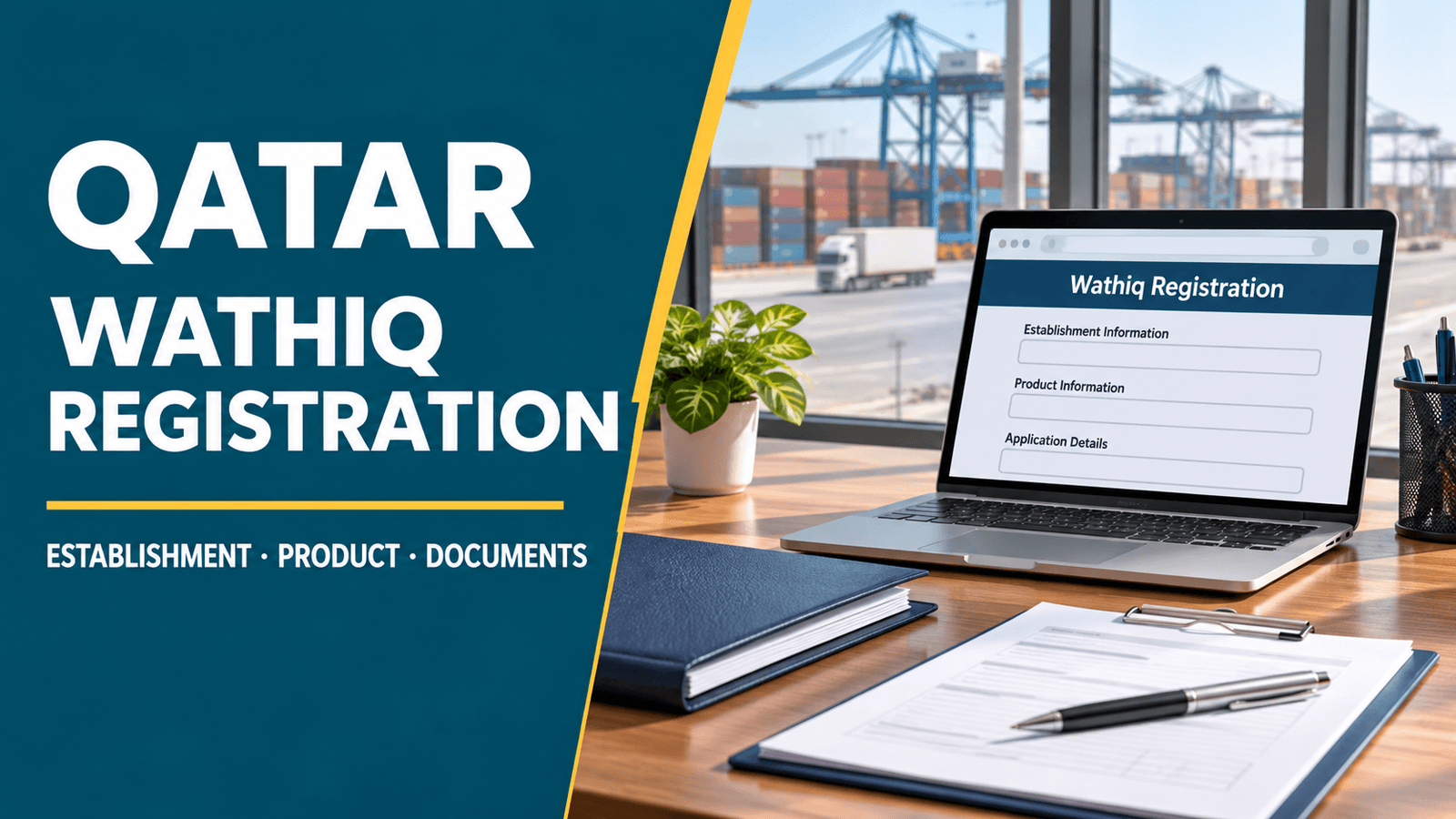
For packaged non-alcoholic beverages intended for sale in Qatar, the local food business needs to distinguish its Wathiq establishment registration from registration of the individual food products. The Ministry of Public Health (MOPH) describes separate electronic services for both. Neither step alone proves that an arriving shipment has passed customs or food inspection. Vietnam is only an illustrative origin here.
1. Who should hold the Wathiq account?
The MOPH Registration of a Food Establishment service says establishments in Qatar register through Wathiq to access services including registration of imported or local food products. Published eligibility conditions include a Qatar-based establishment, valid commercial registration and a food-trade business activity on that registration.
A foreign manufacturer or exporter should not assume its overseas registration can replace the Qatar business account. For a proposed importer, confirm its legal entity details, business activity and who is authorised to submit or respond to MOPH queries. Customs brokers and overseas suppliers can support the local applicant, but their roles are not interchangeable.
2. What belongs in the establishment dossier?
The MOPH service lists a commercial-registration copy, establishment-registration card, company stamp, company logo, owner’s Qatari ID and a responsibility letter. It separately identifies extra items for factories and restaurants, such as a trade licence and, where relevant, food-safety documentation. Do not treat those additional factory or restaurant items as universal requirements for every importing distributor.
Ask the applicant to check the current Wathiq screen and whether its existing establishment record is active before preparing SKU applications. An exporter should request confirmation of account readiness rather than collecting unnecessary local identity documents.
3. What is required for a beverage product record?
MOPH's separate Registration of a Food Product service covers imported and locally produced food. It requires the establishment to have an active Wathiq account. Its listed dossier includes three product images, an image displaying the ingredients and supporting certificates depending on product type. Images must visibly show the label information.
Before the buyer submits the specific drink, reconcile its real formulation, ingredient list, nutrition declaration, package size, storage information, shelf-life details, origin and final label artwork. That reconciliation is a recommended supplier dossier, not a claim that every listed item is a statutory upload field for all beverages.
Checkpoint | Local applicant/importer | Overseas supplier |
|---|---|---|
Establishment account | Verify Qatar business registration and Wathiq access | Identify the intended importer |
Product record | Check SKU details, status and applicable certificates | Supply actual product, ingredient and label images |
Formula and label | Confirm applicable Qatar standards for this category | Resolve discrepancies before printing |
Shipment | Coordinate customs declaration and food inspection | Provide accurate commercial and supporting documents |
4. Why registration is not shipment release
The MOPH Inspection of Imported Food service is a different step. Its official page says inspection is accessed after the customs broker prepares an import declaration in the Qatar customs single-window Al Nadeeb. It also identifies registration of the importing company and its products in Wathiq as service conditions.
The inspection page lists an official health certificate or a conformity certificate from an accredited body, invoice, customs-declaration copy and a packing list if available. It discusses halal evidence where meat, meat products or animal-derived ingredients are involved. Do not infer that every plant-based juice needs a halal slaughter certificate or that every drink needs identical documentation.
Inspection and possible laboratory analysis concern the actual consignment, not merely an approved-looking product record. The exact applicable technical specifications, documents, inspection outcomes and release status must be checked against the current Wathiq and MOPH instructions for that shipment.
5. Buyer decision before label printing or dispatch
Ask the Qatar importer to confirm: (1) food-trade registration and active Wathiq access, (2) each intended SKU's record and evidence, (3) category-specific label and certificate rules, (4) the agreed exporter/importer document set, and (5) who will monitor Al Nadeeb and MOPH inspection decisions.
Stop point: do not print final Qatar-specific retail artwork or dispatch a commercial consignment while the local applicant cannot confirm the relevant product record or category requirements. A portal submission is not a certificate of customs clearance or a guarantee of retail sale.
For beverage sourcing or a possible OEM/private-label project, send the destination, formulation/category, package format and estimated order volume to VINUT TRUST for commercial discussion. Legal registration and import-release decisions belong with the responsible Qatar business and authorities.
QUESTIONS & ANSWERS
Frequently asked questions
Can an overseas beverage manufacturer register products without a Qatar establishment?
MOPH's published product-registration service requires an active Wathiq food-establishment account. An exporter should confirm the authorised local applicant and its role before preparing materials.
Will one Wathiq establishment registration cover future new flavours automatically?
The MOPH lists food-establishment registration and product registration as separate services. The importer should check the exact product records for additional flavours or packaging variants.
Are three product images and a label-ingredients image required for the application?
Those items appear in MOPH's published food-product registration service. The local account holder should verify the current upload screen and any category-specific supporting certificates.
Does a registered product skip Al Nadeeb and MOPH inspection?
No. MOPH separately describes an import customs declaration in Al Nadeeb and inspection of the arriving food shipment. The actual clearance and inspection outcome must be verified.
Dubai Food Item Registration and Label Assessment for Beverages
A Dubai importer checklist for food-item registration and label assessment, including SKU dossiers, Montaji+ and ZAD questions, and pre-shipment controls.
Read Story
Qatar Beverage Import Clearance: Inspection and Document Checklist
Prepare a Qatar beverage consignment for Al Nadeeb customs declaration and MOPH food inspection, with document owners, hold points and release checks.
Read Story
Saudi Food Product Registration for Imported Drinks: Ghad Guide
Ghad registration and clearance checklist for Saudi beverage importers.
Read Story